
Managementsite netwerk
Jonge Bazen
De praktijk van het jonge leiding geven
Bert Overbeek is management-trainer, team-coach en interim manager. Opgeleid door NS en Schouten en Nelissen, besloot hij na 25 jaar loondienst om voor zichzelf te gaan werken. Hij wilde zijn klanten meer op maat bedienen. Ook wilde hij de kwaliteit van zijn werk vergroten en hij had het gevoel dat hij daarvoor onafhankelijk moest kunnen opereren.
Prof. dr. Mastenbroek van Managementsite ‘ontdekte’ dat Bert een originele management-denker en -schrijver was. Hij vroeg hem in 2006 of hij een weblog voor jonge managers wilde bijhouden, als partnerlink van het veelgelezen ManagementSite. Sindsdien schreef hij meer dan 2000 artikelen zeven managementboeken. Ze werden uitgegeven door Haystack en door Futuro Uitgevers. Vier boeken werden bestsellers en eindigden in de Managementboek top 5.
Overbeek vindt kennisdeling zo belangrijk, dat hij hier op Jongebazen de finesses van het managementvak deelt met zijn collega’s. Het is nodig in tijden van verandering. Aritificial Intelligence heeft dan ook volop zijn aandacht, maar vooral in combinatie met gedrag: wat wordt de rol van de mens straks en hoe kan hij zich daarop voorbereiden? Het gaat bij Bert trouwens niet alleen over AI. In zijn boek 'De Schakelaar' zet hij uiteen hoe hij vindt dat de manager van de toekomst zijn teams tot maximale prestaties kan leiden.
Correspondentie met Bert Overbeek gaat via icloud.com. Gewoon zijn naam in kleine letters ervoor en er is contact. Zijn website? bertoverbeek.com
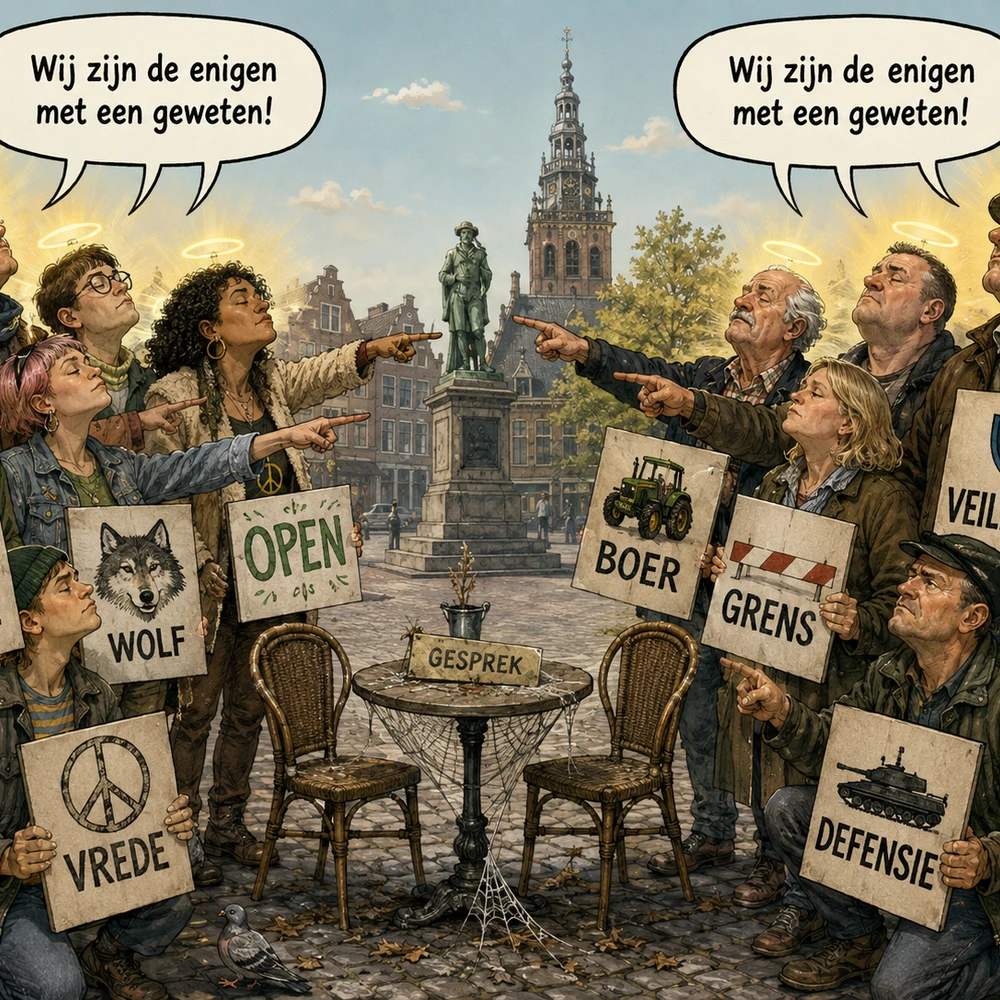
Polarisatie (1): Niemand heeft het patent op rechtvaardig en sociaal gedrag
Argumenten in discussies komen meestal uit goede intenties, ook bij mensen die het oneens zijn met je


De overheid vergeleken met die van 1970
Hebben we steeds meer mensen nodig om te besturen?
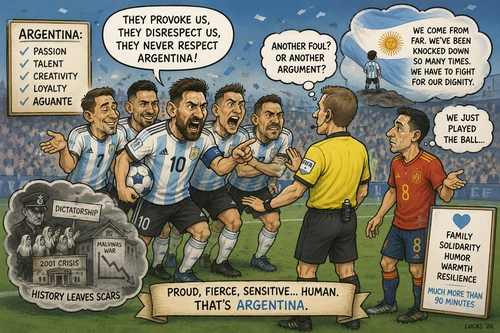
Argentina Against the World?
On pride, provocation, and a country that feels both great and wounded
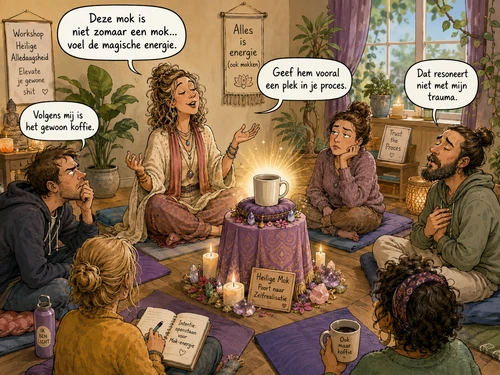
Grote 'magische' woorden voor alledaagse zaken
De werkwanen van alledag lijken bijna bovenaards in spirituele subculturen
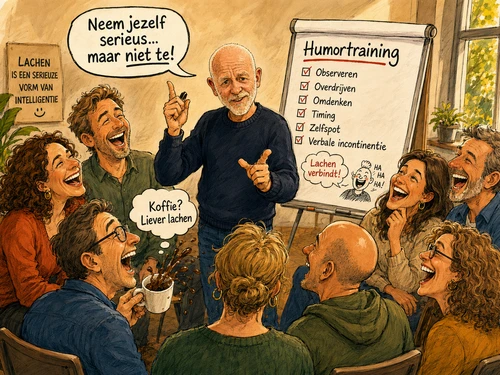
Humor als teamontwikkelingsmiddel
Afscheidstraining van trainer/coach Bert Overbeek

De spirituele leider als biologisch fenomeen
Laat je niet foppen!

Recente reacties
Dear Bert,
Thank you for this article. Most people just call the Argentine players hotheads. You looked deeper. You linked their behaviour to national pride, to old greatness, to the ‘pibe’ myth, and to group loyalty. You also brought in real history: the dictatorship, the Malvinas war, and the 2001 crisis. You explain the behaviour without excusing it, which is not easy to do well. You did it well.
I want to add something to your piece by trying to look one step further back in history.
First, a word about Gyuri Vergouw's reaction to your piece. He shows that this pattern is old, going back sixty years. In 1966, Argentine player Antonio Rattín refused to leave the field after a foul and sat down on the red carpet made for the Queen. That event led to the red and yellow cards we use today. In the 1970s, Argentina played so rough that Ajax avoided matches against them for a few years, afraid of injuries. In 1978, Argentina played the World Cup under a military dictatorship, and Vergouw thinks that pain may still shape their behaviour today. He also notes that in 2026 Argentina got very few cards, and VAR decisions kept going their way — which suggests the behaviour is rewarded, not just allowed. After the final, player Leandro Paredes said nothing online about his own actions, only about pride in the flag. Vergouw sees this as a small sign that looking inward is not yet part of the culture.
Vergouw supports your idea that the pattern is old and keeps repeating. And I want to try to add another layer. I see it as a system with five steps: a wish, a cost, a result, a rejection, and a feedback loop:
1. The wish. In the late 1800s, Argentina's leaders wanted more than wealth. They wanted the country to be seen as truly European. Buenos Aires even called itself ‘the Paris of the south.’
2. The cost. To reach that wish, the country harmed its own people. Indigenous people were killed or driven off their land, in campaigns such as the Conquista del Desierto (1878–1885), with violence continuing into the 1920s. Black Argentines were sent to the front lines in wars, hit hardest by disease, and slowly written out of the census. Slavery lasted in Argentina until 1853, but schools still taught that Argentina simply was a white, European country, presenting this as a fact rather than a choice someone had made. One thing survived, though: tango. It came from Black neighbourhoods in Buenos Aires and became the elegant symbol of European Buenos Aires, with its real roots left out of the story.
3. The result. By its own measure, Argentina delivered. Borges became one of the great writers of the century. Maradona and Messi are, arguably, for some the two best footballers who ever played the game. Many families still carry their European names — Fernández, Scaloni, Di María. Argentina won two World Cup outright. It was an economic powerhouse in Latin America. The country is now linked to Europen royalty. Whatever the original wish asked for, Argentina produced it.
4. The rejection. And still, something is missing, and not because the achievement is too small. It seems that ‘being European’ was never something a country could earn from outside. It works more like a place that history assigns, one that talent and trophies cannot move.
There is also a strange twist: the proud, nationalist idea of ‘European’ that Argentina kept alive is close to the version that Europe itself moved away from, becoming more modern, civilized and more globally oriented. So the gap may not be about falling short of Europe. It may be about the two growing apart with differnt values and is the basis of Europe's rejection.
5. The feedback loop. That missing recognition doesn't just disappear. Inside the story, the price already feels paid, so the lack of recognition feels unfair to the Argentines rather than simply unlikely. But there is no clear place to send that feeling, so it comes out instead where Argentina can still act: in defensive pride, in aguante, in a team that feels wronged even while winning, in a push during a match. Vergouw's sixty-year pattern, kept alive by referees who keep rewarding it, shows how long this has had to become normal. There is also a smaller, more personal version of the same thing — someone dancing tango without knowing where it comes from, or taking a DNA test and finding Indigenous or African roots that school never mentioned and understand the he or she is not who they thought they are. And Europe is becoming more international by including onther people, not rejecting them. Look at the Dutch squad, the German, the Englidh, the Belgium, the Spanish. You 'll see other faces, that points to inclusion in the system, not being proud of exclusion.
I think your main idea still stands: a proud self-image, combined with unhealed history, creates pride that is easily hurt. And I just want to add an older layer underneath it. The dictatorship, Malvinas, and 2001 add up to about twenty years, and in each of them Argentina was mainly the one harmed. The story of Indigenous and Black Argentines spans centuries, and here it was Argentina's own leaders who caused the harm. That doesn't cancel the more recent pain — it suggests the wound may run deeper and older than your article covers.
One more point worth adding. Argentina built real, respected ways to remember the dictatorship's victims: the Mothers of the Plaza de Mayo, a human rights ministry, worldwide recognition. It has not yet built the same for Indigenous and Black Argentines. I don't see that as a contradiction so much as unfinished work — work that Argentine historians and activists are already doing, including a 2010 census that, for the first time in over a hundred years, asked about African roots.
To be clear: this is a critique of a system, an old idea and the schools and institutions that kept it alive. It is not a judgment of a people. Argentina also has a strong movement working to recover Indigenous and Black history, and a strong tradition of conscience, seen in the Mothers of the Plaza de Mayo. The players on the pitch did not create this history and are not consciously acting it out. I am describing conditions that make certain behaviour more likely, not making a claim about what is in any one player's mind.
One more angle. The sociologist Norbert Elias studied patterns like this one. He argued that self-restraint is not natural but grows slowly, in societies with a stable state — and Argentina's state never had that stability, with coups, a dictatorship, and repeated crises. Elias also had a theory that fits well here: ‘established–outsider’ relations, where an established group holds status simply by being established rather than by achievement, and outsiders can do everything right and still not be let in, which often makes them defensive and easily hurt. That sounds a lot like Argentina and Europe. But Elias would also warn against turning this into ‘Argentines are just like that’ — his work is about history and relationships shaping a pattern, not about fixed character, which is the same line I've tried to hold throughout this letter.
By its own original measure — genius, culture, sporting greatness — Argentina has already proven itself many times over. There may be nothing left to prove that way. If recognition still hasn't come, that says less about what Argentina should still do for the outside world, and more about where the real work now lies: inward, in continuing what has already begun on Indigenous and Black Argentine history. That work needs no one else's approval, and in the end it may matter more than the recognition that started this whole story.
And if Argentina accepts that it is not a part of Europe but of Latin America, that they are not Europeans but Lations, it will help them a lot and maybe we will get another Argentina. Build another systeem: a new wish, other investments not costs, different results, acceptance for who they are and a different -positive- feedback loop. And this is all about organizing and changing the system that Argentina is. Because the world is also changing.
Thanks again for opening this up.
Dit is een denkfout. Resultaten en getoonde competenties in het verleden zijn geen garantie voor succes in een andere context en omgeving. En zeker niet in een context die aanzienlijk verschilt van die waarin de persoon eerder succes heeft gehad.
Trainers weten dat en doen er ook niet moeilijk over dat ze worden afgerekend op de prestaties die ze boeken in een seizoen. Daarom komen grote trainers ook bijna nooit met excuses.
Een digitale assistent inzetten bij een overleg met meerdere personen geeft een interessante en heel andere dynamiek. Experimenteer er maar eens mee. Ik ben heel benieuwd naar je bevindingen.
https://www.managementsite.nl/innovatieforganiseren/bedrijfswaarde-van-ai-een-digitale-vergaderassistent-aan-tafel
Maar inherent aan het doen of implementatie zit ook dat MVS-verhaal, niet altijd uitgesproken, maar toch vaak duidelijk aanwezig.
Ha Bert, enkele jaren geleden viel mij hetzelfde op, zie artikel op onze site, uit: De management monologen