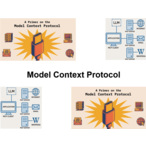
Opleiding: Model Context Protocol
The course Model Context Protocol from SpiralTrain teaches you how to build AI applications that seamlessly connect to external data sources and tools using the standardized Model Context Protocol.MCP Fundamentals
The course Model Context Protocol starts with an overview of the protocol including the AI context problem, JSON-RPC foundation, transport mechanisms, resource concepts, tool definitions, and real-world use case examples.
Protocol Architecture
Next the architecture patterns are explored, covering communication flow, message types, capability negotiation, session management, error handling, connection lifecycle, protocol extensions, and versioning strategies for robust implementations.
Server Implementation
This module covers building MCP servers including SDK installation, implementing resource providers, developing and registering tools, context management, data source integration, authentication methods, configuration options, and comprehensive testing approaches.
Client Development
Here participants learn to build MCP clients including SDK integration, connection management, server discovery, resource access patterns, tool invocation, prompt usage, response handling, state management, and error recovery mechanisms.
Integration Patterns
This part focuses on integrating MCP with LLMs such as Claude and OpenAI. Topics include context injection, multi-server setups, fallback strategies, caching mechanisms, rate limiting, and monitoring solutions.
Production Deployment
The course concludes with production deployment strategies including containerization, scaling solutions, load balancing, security hardening, API gateway setup, version management, documentation standards, testing strategies, monitoring tools, and hands-on production projects.
Audience Course Model Context Protocol
This course is intended for AI developers, and software architects who want to build AI applications that connect to external data sources and tools using the Model Context Protocol.
Prerequisites Course Model Context Protocol
Participants should have solid programming experience in Python or TypeScript and understanding of API development.
Realization Training Model Context Protocol
The course combines theoretical sessions with hands-on labs guided by a trainer. Real-world case studies are central to the training experience.
Model Context Protocol Certificate
After completion, participants receive a certificate of participation in Model Context Protocol.
Modules
Module 1: MCP Fundamentals
- MCP Protocol Overview
- AI Context Problem
- Protocol Specifications
- JSON-RPC Foundation
- Transport Mechanisms
- Client-Server Model
- Resource Concepts
- Tool Definitions
- Prompt Templates
- Use Case Examples
- Security Basics
Module 2: Protocol Architecture
- Architecture Patterns
- Communication Flow
- Message Types
- Request-Response Cycle
- Capability Negotiation
- Session Management
- Error Handling
- Connection Lifecycle
- Protocol Extensions
- Versioning Strategy
- Best Practices
Module 3: Server Implementation
- Server Setup
- SDK Installation
- Resource Providers
- Implementing Resources
- Tool Development
- Tool Registration
- Context Management
- Data Source Integration
- Authentication Methods
- Configuration Options
- Testing Servers
Module 4: Client Development
- Client Setup
- SDK Integration
- Connection Management
- Server Discovery
- Resource Access
- Tool Invocation
- Prompt Usage
- Response Handling
- State Management
- Error Recovery
- Performance Optimization
Module 5: Integration Patterns
- LLM Integration
- Claude Integration
- OpenAI Integration
- Context Injection
- Multi-Server Setup
- Fallback Strategies
- Caching Mechanisms
- Rate Limiting
- Monitoring Solutions
- Logging Practices
- Real-World Examples
Module 6: Production Deployment
- Deployment Strategies
- Containerization
- Scaling Solutions
- Load Balancing
- Security Hardening
- API Gateway Setup
- Version Management
- Documentation Standards
- Testing Strategies
- Monitoring Tools
- Production Projects