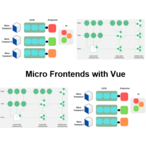
Opleiding: Micro Frontends with Vue
The course Micro Frontends with Vue from SpiralTrain shows you how to build flexible and scalable frontend architectures using Vue.Introduction
The course Micro Frontends with Vue begins with an introduction to the concept of micro frontends and their differences from monolithic applications. Use cases, and core principles are explained with examples from industry practice.
Vue Recap
Next, participants review essential Vue concepts including components, directives, reactivity, props and events, routing with Vue Router, and the Composition API. This recap ensures a solid basis for building micro frontends.
Architecture
This module explores architecture patterns and design approaches for Vue micro frontends. Topics include component composition, event bus communication, routing strategies, shell applications, lazy loading, and error boundaries.
Module Federation
Participants learn how to use Webpack Module Federation with Vue. Covered are host and remote apps, dynamic imports, shared libraries, version handling, runtime integration, and best practices for setup and error handling.
Integration
Integration is discussed with focus on UI composition, shared navigation, cross-app routing, and service integration. Special attention is given to authentication, authorization, and performance monitoring in real-world scenarios.
State Management
This part addresses state management in Vue. Subjects include local state, props and events, Vuex with modules, and newer alternatives like Pinia. Cross-app state sharing and debugging tools are also reviewed.
Deployment
Deployment strategies cover CI/CD pipelines, independent releases, and environment configurations. The module also includes containerization with Docker, deployment on Kubernetes, cloud hosting options, and rollback planning.
Testing
Participants learn about testing micro frontends with Vue. Unit testing with Vue Test Utils and Jest, integration testing, and end-to-end testing with Cypress are explained, alongside automation and accessibility checks.
Advanced Topics
The course concludes with advanced subjects such as security, authentication and authorization patterns, performance optimization, error handling, and caching strategies. Future trends are discussed, and a hands-on project wraps up the training.
Audience Course Micro Frontends with Vue
This course is designed for Vue.js developers, UI engineers, and technical leads who want to explore how micro frontend patterns can be applied to modern web applications.
Prerequisites Course Micro Frontends with Vue
Participants should have solid knowledge of JavaScript and Vue development. Understanding of modular design, web components and tooling like Vue CLI or Vite is recommended.
Realization Training Micro Frontends with Vue
The course combines conceptual explanations with guided exercises and coding workshops. Participants work on cases that simulate challenges encountered in real-world projects.
Micro Frontends with Vue Certificate
Upon completion, participants receive a certificate of participation in Micro Frontends with Vue.
Modules
Module 1 : Introduction
- Micro Frontends Overview
- Monolith vs Micro Frontends
- Advantages and Limitations
- Use Cases
- Core Principles
- Team Autonomy
- Deployment Flexibility
- Integration Styles
- Scaling Applications
- Industry Examples
Module 2 : Vue Recap
- Vue Fundamentals
- Vue Components
- Directives Basics
- Reactivity System
- Props and Events
- Vue Router Intro
- Vue CLI
- Data Binding
- Lifecycle Hooks
- Composition API
Module 3 : Architecture
- Architecture Patterns
- Component Composition
- Shared vs Isolated State
- Event Bus Pattern
- Routing Strategies
- Shell Application
- Cross-App Communication
- Lazy Loading Modules
- Error Boundaries
- Resilience Patterns
Module 4 : Module Federation
- Webpack Federation Setup
- Host and Remote Apps
- Dynamic Imports
- Shared Libraries
- Exposing Components
- Version Handling
- Runtime Integration
- Error Handling
- Configuration Files
- Best Practices
Module 5 : Integration
- UI Composition
- Shared Navigation
- Authentication Integration
- Authorization Handling
- Micro Frontend Shell
- Cross-App Routing
- Service Integration
- Performance Monitoring
- Testing Integration
- Real-World Scenarios
Module 6 : State Management
- State Basics in Vue
- Local Component State
- Props and Events
- Vuex Overview
- Vuex Store Setup
- Modules in Vuex
- Cross-App State Sharing
- Async State Handling
- Pinia Introduction
- Debugging Tools
Module 7 : Deployment
- Deployment Strategies
- Independent Deployments
- CI/CD Pipelines
- Environment Configurations
- Docker with Vue
- Kubernetes Deployments
- Cloud Hosting Options
- Version Control
- Rollback Strategies
- Monitoring Solutions
Module 8 : Testing
- Unit Testing Vue
- Vue Test Utils
- Jest Framework
- Integration Testing
- End-to-End Testing
- Cypress Framework
- Contract Testing
- Test Automation
- Performance Testing
- Accessibility Testing
Module 9 : Advanced Topics
- Security Concerns
- Authentication Patterns
- Authorization Patterns
- Performance Optimization
- Error Handling
- Accessibility Concerns
- Caching Strategies
- Future Trends
- Case Studies
- Hands-On Project